Essential Guide to Vehicle Door Rubber Seal: Benefits, Innovations & Global Applications
Understanding Vehicle Door Rubber Seals: Why They Matter Worldwide
If you’ve ever slid into your car and noticed that satisfying cushion of silence when closing the door, a vehicle door rubber seal is doing its quiet magic. Far from just a mundane strip of rubber, these seals play a crucial role in keeping vehicles safe, energy-efficient, and even humane—yes, humane! They’re frontline guardians against weather, noise, pollution, and even theft.
Globally, the automotive industry churns out over 70 million vehicles every year (source: IHS Markit), each demanding robust door sealing to meet environmental standards and driver comfort expectations. Understanding these essential components means we can enhance vehicle longevity, cut emissions, and improve urban livability. It’s a surprisingly impactful piece of rubber, wouldn't you say?
The Global Context: Why Vehicle Door Rubber Seals Are More Important Than Ever
The push towards greener cities and tighter emissions regulations means vehicle manufacturers can’t afford leaky doors—literally. According to the ISO 16750 standard, environmental sealing must withstand extreme temperatures, humidity, and pollution. A compromised vehicle door seal means more fuel consumption because your AC or heater fights the outside world unnecessarily, emitting more CO2.
Emerging markets in Asia, Africa, and South America are stepping up vehicle production quickly, increasing the demand for quality rubber seals. Meanwhile, developed countries demand innovation—like noise reduction and smart seals integrated with sensors. Oddly enough, a tiny strip of rubber is at the crossroads of climate goals and tech innovation worldwide.
What Exactly Is a Vehicle Door Rubber Seal?
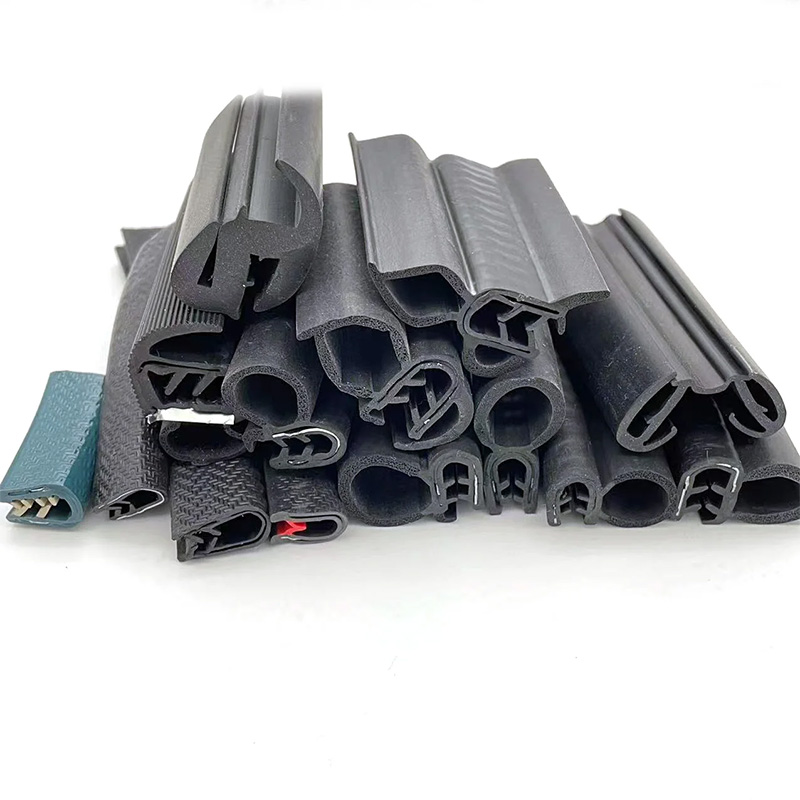
Simply put, a vehicle door rubber seal is a flexible gasket installed along the edges of car doors. Its main job? To create a tight barrier against air, water, dust, and noise infiltration. But on a more technical level, it’s engineered from compounds like EPDM rubber (ethylene propylene diene monomer), which provides excellent weather resistance and elasticity over a wide temperature range.
It’s the reason your car interior feels cozy during a snowstorm and serene on a busy highway. Beyond comfort, these seals contribute to a vehicle’s structural integrity and even play a role in crash safety by maintaining proper door positioning.
Vehicle Door Rubber Seals—A Small Part with Big Roles:
- Weatherproofing: Shields from rain, snow, and dust.
- Noise Reduction: Keeps unwanted sounds outside.
- Energy Efficiency: Retains heating/cooling inside.
- Security: Prevents easy entry and water damage.
Core Factors in Vehicle Door Rubber Seal Design and Application
1. Durability
Automotive seals must last through hundreds of thousands of door cycles and endure exposure to UV rays, road salts, ozone, and temperature swings from -40°C to over 80°C. EPDM rubber usually runs the show here, but design tweaks like coating layers or built-in reinforcements can extend lifespan.
2. Flexibility and Fit
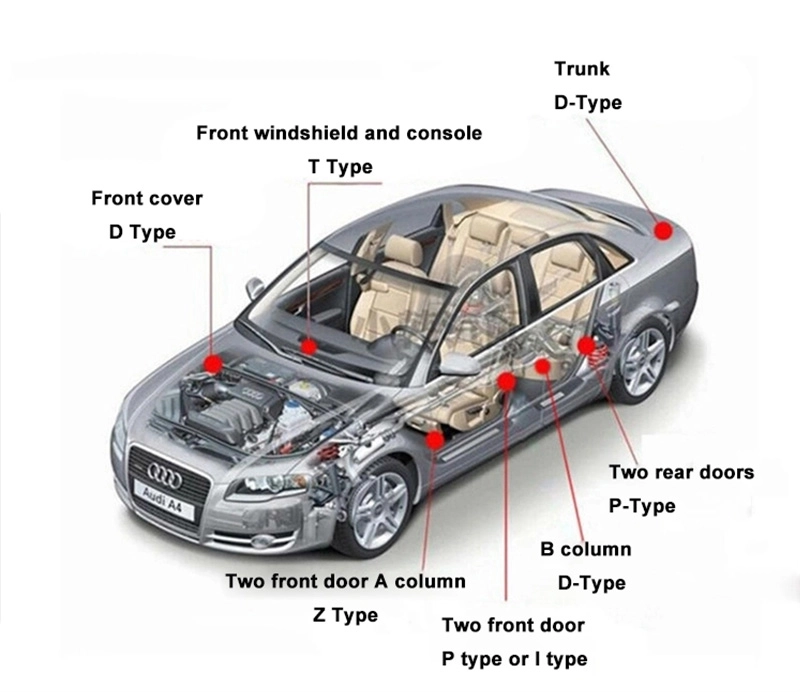
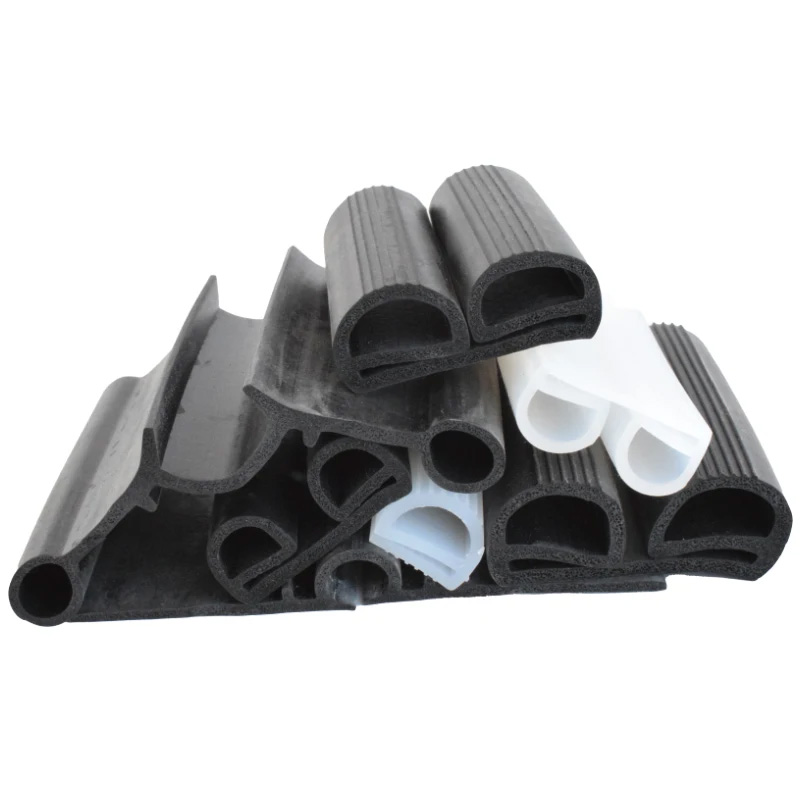
Seals need to contract, expand, and compress perfectly to allow easy door closing while maintaining the seal. The geometry and profile shape—whether bulb seal, lip seal, or contour seal—are adapted to specific vehicle models.
3. Cost and Manufacturing Efficiency
OEMs look for low-cost, high-volume solutions that don’t sacrifice quality. Injection molding, extrusion, and co-extrusion are common production methods. As you might guess, balancing price with performance is a constant industry challenge.
4. Environmental Resistance
Resisting chemicals like gasoline, oils, and cleaning solvents is essential. Plus, the seal must resist hardening or cracking from oxidation or exposure to aggressive climates.
5. Noise and Vibration Attenuation
Many modern cars emphasize comfort, so seals often integrate sound-absorbing materials or special profiles to minimize rattling and wind noise.
Product Specification Example:
| Specification | Details |
|---|---|
| Material | EPDM Rubber with Silicone Coating |
| Temperature Range | -40°C to +90°C |
| Hardness (Shore A) | 55 ± 5 |
| Compression Set | Max 30% after 22h at 70°C |
| UV Resistance | Excellent (ISO 4892-2 tested) |
Real-World Examples: Where Vehicle Door Rubber Seals Matter Most
Think about harsh climates like Siberia or Northern Canada, where weather proofing is non-negotiable. Here robust rubber seals protect vehicles from frost and water ingress that could freeze and cause costly repairs. In rapidly urbanizing cities such as Mumbai or São Paulo, noise pollution is a growing concern. Vehicle door rubber seals reduce this constant background clamor, improving driver focus and comfort.
In the logistics sector, trucks transporting sensitive goods across rough terrains rely on tight door seals to prevent dust and moisture damage. Even electric vehicle makers focus heavily on sealing innovations to optimize battery systems' thermal management, showcasing the evolving role of these components.
Vendor Comparison Table:
| Vendor | Material Options | Typical Applications | Lead Time | Customization |
|---|---|---|---|---|
| XTShuoding | EPDM, Silicone, TPE | Passenger cars, commercial vehicles | 4-6 weeks | High (profiles, hardness, colors) |
| GlobalSeal Inc. | EPDM, NBR | Trucks, industrial vehicles | 6-8 weeks | Medium |
| AutoSeal Tech | Silicone, EPDM | Luxury and electric cars | 3-5 weeks | High |
Advantages & The Long-term Value of Quality Vehicle Door Seals
At a glance, quality rubber door seals save money by preventing water leaks, rust, and energy loss. But the story doesn’t end there. The emotional comfort of a quiet, draft-free cabin leads to happier drivers and passengers—important when you consider the hours spent commuting or road-tripping. And safety-wise, your seals contribute to airtight door closures which affects vehicle crash behavior and theft prevention.
Environmentally, better seals reduce fuel or battery drain, cutting down carbon footprints at a massive scale. Thus, investing in premium seals is not only an engineering choice but a social and ecological one — it feels good, frankly, to keep the planet and people safer in something as simple as a door gasket.
Looking Ahead: Innovations Shaping the Future of Vehicle Door Rubber Seals
The future points toward “smart seals,” integrating sensors that detect leaks or door status for advanced security and diagnostics. Material science is experimenting with bio-based rubbers and nano-enhanced compounds to boost longevity and reduce environmental impact. Digital twin technology allows designers to simulate seal performance before production, saving time and resources.
Also, as electric vehicles become mainstream, sealing solutions evolve to optimize thermal regulation and soundproofing considering these vehicles' unique profiles.
Challenges Facing Vehicle Door Rubber Seal Manufacturers
While advances abound, challenges remain. Balancing cost with the push for more durable, eco-friendly materials is tricky. Some seals degrade prematurely under harsh chemical exposure or extreme climates. Customization requirements vary widely across vehicle types and geographies, complicating manufacturing logistics.
Experts suggest adopting modular designs and tighter quality control, plus collaborating across supply chains to anticipate environmental regulations better. I suppose this field’s complexity is why partnerships with specialized suppliers like XTShuoding are so prized.
FAQ: Practical Insights into Vehicle Door Rubber Seals
- Q: How often should vehicle door rubber seals be replaced?
A: Typically, door seals last 5–10 years, depending on climate and use. Regular inspection for cracks or stiffness helps decide replacement timing. - Q: Can damaged seals affect vehicle fuel efficiency?
A: Yes. Leaky seals let air inside, forcing HVAC systems to work harder, consuming more fuel or battery power. - Q: Are silicone seals better than traditional EPDM?
A: Silicone offers better temperature resistance and longevity, but at a higher cost. EPDM remains popular for its balance of performance and price. - Q: Can I customize seals for my vehicle?
A: Absolutely. Vendors often tailor profiles, materials, and colors upon request to fit specific models or aesthetic demands. - Q: How do I know if my vehicle door seal is failing?
A: Common signs include water leaks, increased road noise, visible cracks, or the door feeling loose or harder to close.
Wrapping Up: Why the Smallest Parts Create the Biggest Impact
From reducing noise pollution in bustling cities to sealing in crucial energy in eco-conscious models, the humble vehicle door rubber seal quietly supports a safer, greener, and more comfortable ride for millions worldwide. If you’re looking to source or upgrade your vehicle sealing solutions, don’t hesitate to explore the options at XTShuoding’s site — where quality meets innovation.
Share
-
Eco Friendly Drawstring Jute Bag Guide for Sustainable PackagingNewsApr.16,2026
-
Elegant Wedding Jute Bags for Sustainable and Rustic Event PackagingNewsApr.09,2026
-
Sustainable Jute Bags for Coffee Packaging and Branding SolutionsNewsApr.07,2026
-
Explore the Benefits of Sustainable Saran Jute Bags for Your BusinessNewsApr.04,2026
-
Sustainable Jute Soap Bags Packaging Solutions for Eco Friendly BrandsNewsMar.31,2026
-
Discover the EcoFriendly Charm of Jute Favor Bags for Every OccasionNewsMar.28,2026