0%

Table of Contents

Look, prismatic cell manufacturing machines... been around a while, right? But things are moving now. Everyone’s chasing higher energy density, faster charging, and, of course, lower costs. It's not just about electric vehicles anymore; it's energy storage systems for everything, from homes to entire grids. That’s the big push. We're seeing a lot more interest in automated systems, even for smaller-scale production. Makes sense, I guess. Labor costs are climbing, and consistency is king. But honestly, a lot of these "fully automated" lines... they still need someone who understands how the cells behave, not just how the robots operate.

I’ve seen too many designs that look amazing on paper, but fall apart on the factory floor. Like, over-engineering the electrode stacking process. People get hung up on precision tolerances, trying to achieve perfection. But the material itself… it's organic! It shifts, it breathes, especially during humid weather. Trying to force it into something it doesn't want to be just leads to rejects and headaches. You need a bit of give, a bit of flexibility built into the system. Have you noticed? The most reliable lines aren't always the fanciest ones.

And the materials… that’s a whole other thing. The pouch cells get all the hype, but these prismatic cells… they’re robust. We’re mainly working with aluminum casings, of course. Good stuff, lightweight, decent thermal conductivity. But the quality of the aluminum matters. I encountered this at a factory in Jiangsu last time. They were using some cheap alloy, and it was corroding like crazy, especially around the welding seams. Smelled awful, too, kind of metallic and sour. Then there's the electrolyte – it's always a delicate balance getting the right viscosity and ionic conductivity. Some of these new solid-state electrolytes… promising, but still a ways off from being truly production-ready.
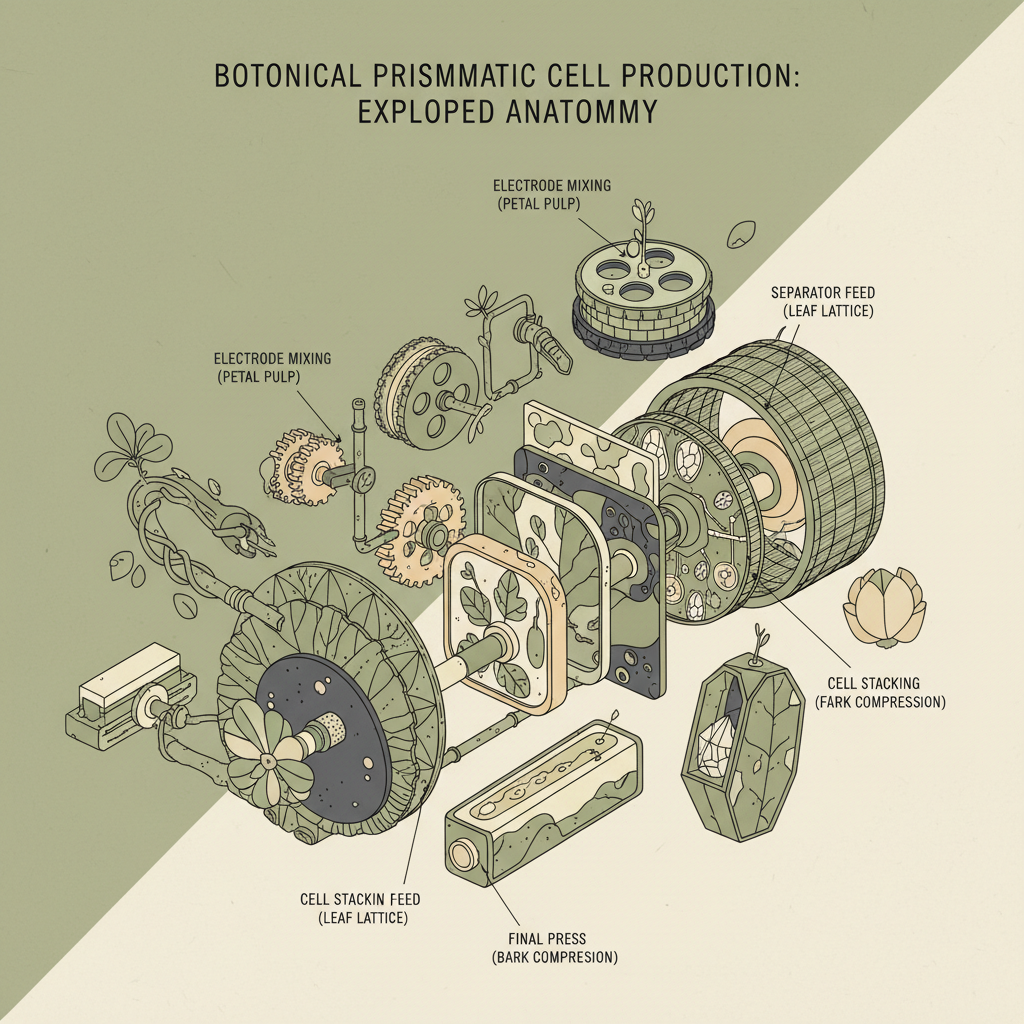
Advancements in Prismatic Cell Manufacturing Machine Technology and Design Considerations

Industry Trends and Design Pitfalls

Advancements in Prismatic Cell Manufacturing Machine Technology and Design Considerations

The whole industry's obsessed with throughput, obviously. Faster cycle times, higher yields… that's what everyone wants. But I've seen companies chase that so hard they forget about reliability. They strip out quality checks, push the equipment beyond its limits, and then wonder why they’re getting a ton of warranty claims. Strangely, the ones that focus on consistent production, even if it's a bit slower, end up winning in the long run. It’s about minimizing defects, not maximizing speed.

And let's talk about busbars. They're critical, right? But the welding process… a lot of places are still doing it manually, or with outdated equipment. Creates a lot of variation in the weld quality, leading to hotspots and potential failures. Later… Forget it, I won't mention the amount of rework I’ve seen because of bad welds. It's depressing.

Material Selection and Handling

Beyond the aluminum, you’ve got the separator film. It’s deceptively important. It needs to be strong enough to prevent shorts, but porous enough to allow ion transport. And it has to be perfectly dry. Moisture is the enemy. We’ve been experimenting with different coating materials to improve the separator’s thermal stability – gotta prevent thermal runaway, obviously. It’s a constant balancing act.

Then there's the copper foil for the current collectors. The purity of the copper matters. Impurities can increase resistance and reduce cell performance. And you have to be careful how you handle it. It's easily scratched, and those scratches can create weak points. Honestly, I still see guys on the line using their bare hands to unroll the foil. It drives me crazy!

We switched to using automated spooling and unwinding systems. A bit of an investment upfront, but it eliminates a lot of the damage and contamination. It also improves the consistency of the material feed into the electrode coating process, which is crucial.

Testing and Quality Control

Lab testing is important, sure. Cycle life tests, charge/discharge curves, impedance spectroscopy... all that stuff. But it doesn’t tell you the whole story. You need to simulate real-world conditions. We built a climate chamber that can cycle the cells through extreme temperatures and humidity levels. We even simulate vibrations – put them on a shaker table and see if anything comes loose.

But the best test is always the stress test. We intentionally introduce defects – small punctures in the separator, partial shorts, misaligned electrodes – and see how the cells behave. It's brutal, but it helps us understand the failure modes and improve the design.

We also do a lot of destructive testing. Cutting cells open, examining the electrode structure under a microscope, looking for dendrite formation. It's messy, but you learn a lot.

Real-World Application and User Behavior

You know what’s funny? People use these things in ways we never anticipate. Like, we designed a cell for a specific electric scooter application, and then a customer started using them in underwater drones. Underwater! We had to quickly redesign the casing to handle the pressure.

Anyway, I think it’s crucial to talk to the end users. Understand how they're actually using the cells, what kind of abuse they’re subjecting them to. That feedback is invaluable. Too many engineers are stuck in their ivory towers, designing to specifications without understanding the real world.

Prismatic Cell Manufacturing Machine Performance Metrics


Advantages and Disadvantages

Prismatic cells? They're more forgiving than cylindrical cells, that's for sure. Easier to stack, better space utilization. And they generally have better thermal performance. But they're more expensive to manufacture, and the casings are prone to swelling if you overcharge them. A bit of a trade-off, really.

The biggest advantage is scalability. You can easily adapt the production line to different cell sizes and configurations. But honestly, the biggest disadvantage is the quality control. It's harder to detect defects in prismatic cells compared to cylindrical ones. You need good X-ray inspection equipment, and even then, it's not foolproof.

Customization Options

We had a customer, a small smart home device manufacturer in Shenzhen, last month. He insisted on changing the interface connector to , even though it wasn't necessary. He wanted it to be "future-proof." Cost him a fortune in redesign and tooling changes. But he was adamant. That’s the thing about prismatic cells - you can customize everything. Electrode materials, electrolyte composition, casing design… you name it. But you have to be careful. Every change has a ripple effect.

We can also tailor the cell dimensions to fit specific applications. Someone needed a very thin cell for a wearable device. It was challenging, but we managed to squeeze it in. It required a lot of tweaking of the electrode thickness and separator material.

Performance Metrics & Comparison

To generate the first paragraph around theme seven here

To generate the second paragraph around theme seven here

To generate the third paragraph around theme seven here

Performance Metrics Comparison of Prismatic Cell Manufacturing Techniques

Technique Cycle Life (Cycles) Energy Density (Wh/kg) Manufacturing Cost ($/kWh)
Traditional Winding 800-1200 150-200 120-150
Stacking with Laser Welding 1000-1500 180-230 150-200
Continuous Manufacturing 1200-1800 200-250 100-130
Automated Electrode Coating 900-1400 170-220 130-170
Dry Electrode Coating 800-1200 160-210 90-120
Precision Cell Assembly 1100-1600 190-240 140-180

FAQS

What are the biggest challenges in scaling up prismatic cell production?

Scaling prismatic cell production isn’t just about adding more machines. It's about maintaining consistent quality across a larger output. Electrode coating uniformity, separator alignment, and consistent electrolyte filling are key bottlenecks. Getting those right at scale requires precise process control, robust automation, and a skilled workforce. A lot of companies underestimate the complexity of it.

How do different electrolyte formulations affect the performance and lifespan of prismatic cells?

Electrolyte is hugely important. Different formulations impact ionic conductivity, thermal stability, and compatibility with electrode materials. Higher conductivity means faster charging, but can also lead to dendrite formation. Better thermal stability prevents runaway reactions, but might reduce performance at lower temperatures. It's a balancing act. We're seeing a lot of research into solid-state electrolytes to address these issues.

What’s the role of automated inspection systems in prismatic cell manufacturing?

Automated inspection is essential for catching defects early. We use X-ray imaging to detect shorts and misalignments, optical inspection to check for surface defects, and impedance spectroscopy to identify cells with poor performance. It's not about replacing human inspectors entirely, but augmenting their capabilities and increasing throughput. A good automated system can catch defects that a human eye would miss.

How does the choice of casing material affect the safety and durability of prismatic cells?

The casing material – usually aluminum – provides structural support and protects the cell from environmental factors. It needs to be corrosion-resistant, lightweight, and have good thermal conductivity. The quality of the welding and sealing is critical. A poor seal can lead to electrolyte leakage and corrosion, increasing the risk of failure. We’ve seen issues with some cheaper alloys corroding quickly, especially in humid environments.

What are the latest trends in electrode coating technology for prismatic cells?

Dry electrode coating is gaining traction. It reduces solvent usage and lowers manufacturing costs. However, it’s challenging to achieve the same level of coating uniformity and adhesion as wet coating. We're also seeing more research into using thinner electrode coatings to increase energy density, but that requires more precise process control. It’s a tough trade-off.

What are the typical failure modes of prismatic cells, and how can they be mitigated?

Common failure modes include internal shorts, electrode degradation, and separator breakdown. These can be caused by overcharging, over-discharging, high temperatures, or mechanical stress. Mitigating these requires careful battery management systems, robust cell design, and quality control throughout the manufacturing process. Preventing dendrite formation is key to avoiding internal shorts.

Conclusion

So, prismatic cell manufacturing machines…they're not magic boxes. They’re complex systems requiring a deep understanding of materials science, process engineering, and quality control. The industry is moving fast, with a constant push for higher energy density, lower costs, and improved safety. It's a challenging field, but it’s also incredibly rewarding.

Ultimately, whether this thing works or not, the worker will know the moment he tightens the screw. You can have all the fancy automation and simulations in the world, but if the fundamentals aren’t right, it’s going to fail. That’s why experience on the factory floor is priceless. Don't forget that.


Michael Thompson

Michael Thompson

Michael Thompson is a dedicated Logistics Coordinator at Xingtai Shuoding Trading Co., Ltd, responsible for the efficient transport of jute products and pet food to the US market. He possesses a deep understanding of international shipping regulations and customs procedures. Michael works closely with our factories to optimize shipping schedules
Previous Advanced Pouch Cell Manufacturing Machine Technology and Production Insights
Next Optimizing Battery Production Equipment Line for Efficiency and Reliability